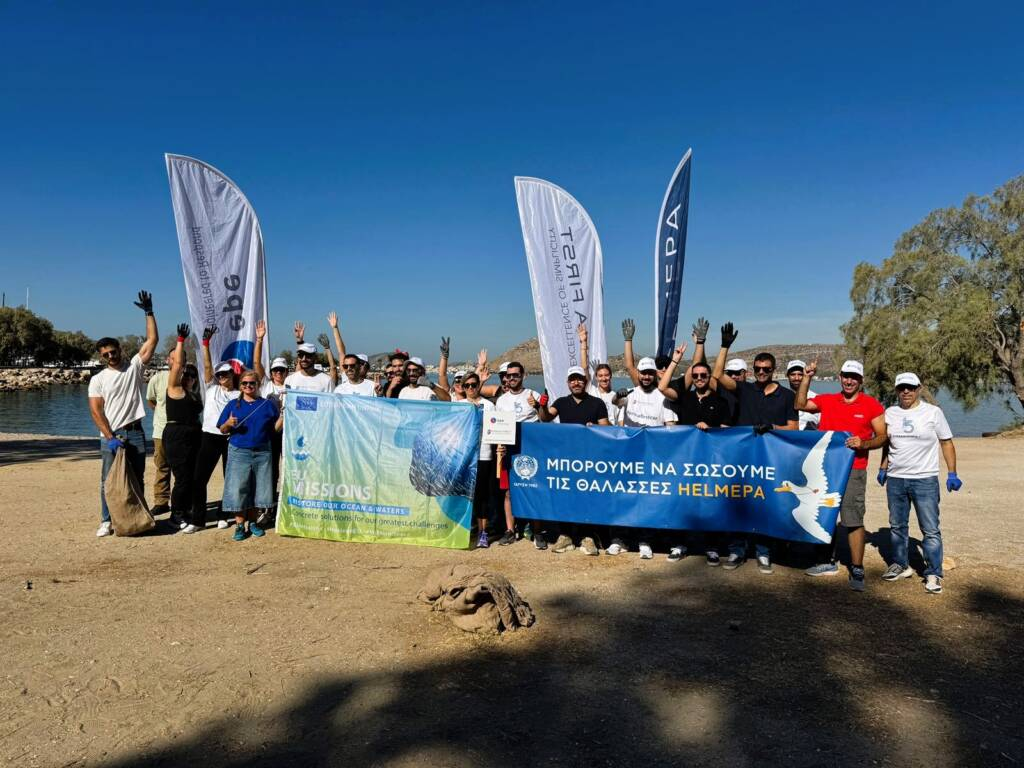
Help us save the Cretan sea turtles in Almyrida
Contribute to improving the loggerhead sea turtles (Caretta caretta)' living conditions and survival. It's not difficult, but it will help save their lives.
Why it is important?
How you can help
Saving sea turtles does not always require something dramatic. Sometimes it starts with very ordinary choices: the trash you pick up, the lights you turn off, the distance you keep, and the habits you change for a single day at the beach. Small actions may feel insignificant, but for a nesting female, a hatchling, or an injured turtle, they can be the difference between reaching the ocean and not making it at all.
Leave No Trash Behind
A clean beach is not just more beautiful. It is safer for turtles at every stage of life. Plastic bags, wrappers, bottle caps, cigarette butts, leftover food, and fishing line can all become a threat once the wind or tide carries them into the water. Turtles may swallow plastic by mistake, become tangled in debris, or struggle to cross littered sand. The rule is simple: take everything with you when you leave, and if you notice trash that is not yours, pick up a little extra. For us it is a few seconds. For a turtle, it can mean one less deadly obstacle.
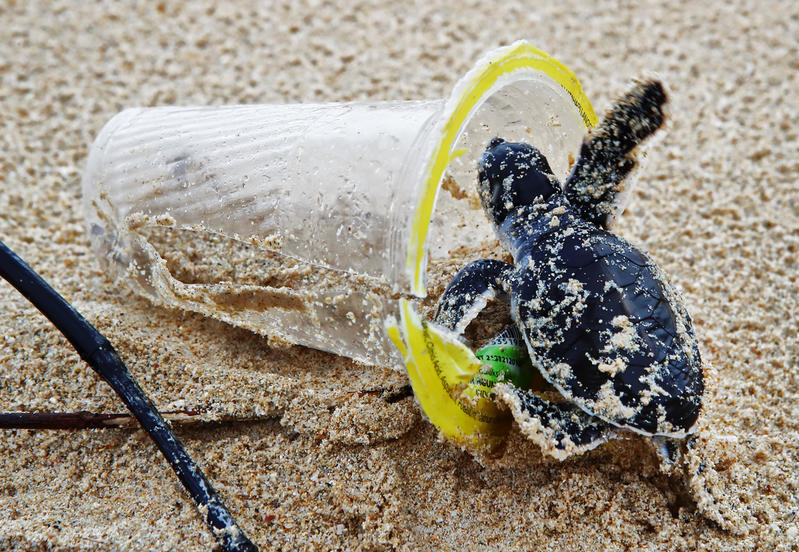
Choose Reusables Over Single-Use Plastic
Many of the items people use for a few minutes stay in the environment for years. Plastic straws, takeaway containers, shopping bags, disposable cutlery, and balloon releases often end up in the sea, where they break into smaller pieces but do not truly disappear. Turtles can mistake drifting plastic for prey, especially when it moves like jellyfish in the water. Carry a reusable bottle, say no to unnecessary plastic, and choose products you can use again. It is one of the easiest ways to reduce the slow flood of waste that turns the ocean into a trap.
Protect Your Skin Without Harming the Sea
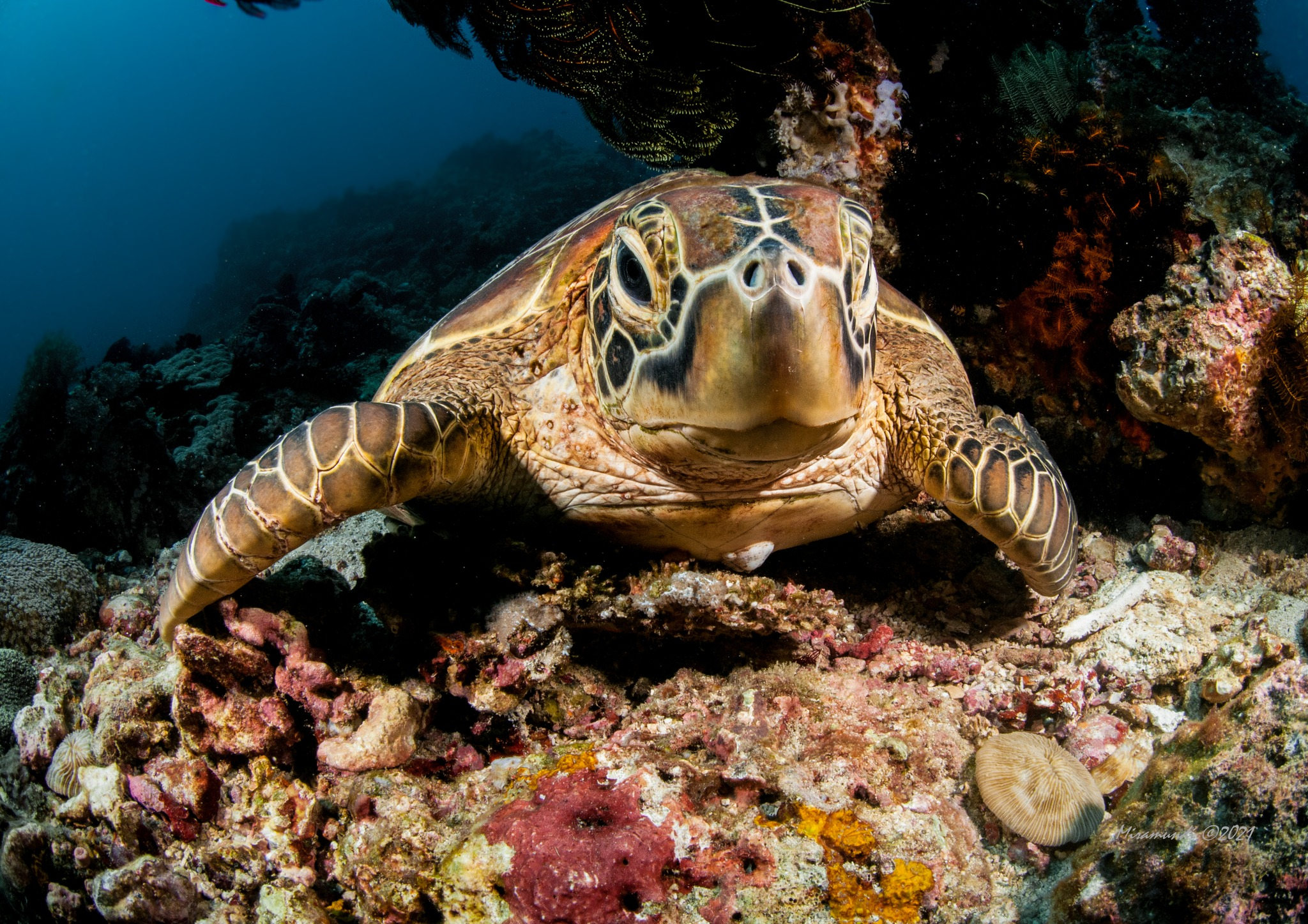
Sun protection matters, but so does what washes off your body into the water. Try to choose mineral-based sunscreen when possible, avoid overusing products right before swimming, and use UV-protective clothing like rash guards, swim shirts, hats, or cover-ups whenever you can. The point is not perfection. The point is reducing the chemical load that enters fragile coastal ecosystems. Healthy reefs, cleaner shallows, and less pollution mean a better feeding and resting environment for marine life, including sea turtles.
Keep the Beach Dark at Night
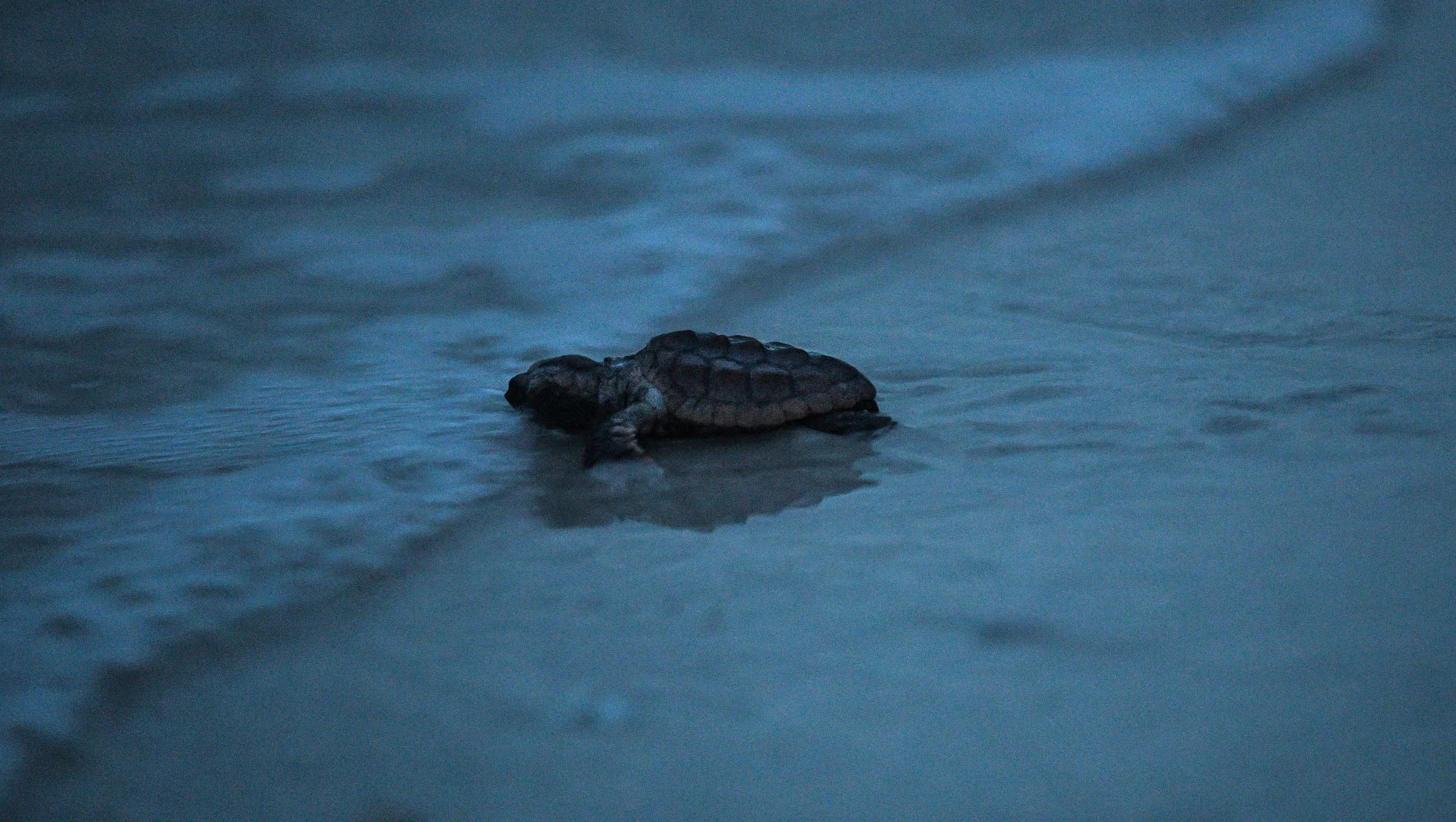
For sea turtles, artificial light can be deadly. Nesting females may feel unsafe and turn back without laying eggs, while hatchlings can crawl toward hotel lights, roads, and promenades instead of the moonlit sea. If you are near the beach at night, avoid flash photography, keep phone lights to a minimum, and switch off unnecessary outdoor lights if you can. Close curtains in beachfront rooms and respect “lights out” rules in nesting areas. A dark beach may seem inconvenient for people. For baby turtles, it is how they find their way home.
Give Turtles Space and Stay Quiet
A sea turtle on the beach is not a photo prop, not a pet, and not a moment to crowd for social media. If you see a nesting turtle or hatchlings, keep your distance, stay quiet, and never touch, chase, block, or surround them. Even a few people standing too close can cause stress and interrupt nesting. Hatchlings are even more vulnerable: they can be disoriented, delayed, or crushed in the confusion. The best way to respect wildlife is often the least exciting one for humans: step back, stay calm, and let the animal do what it came there to do.
Keep Nesting Beaches Clear and Safe
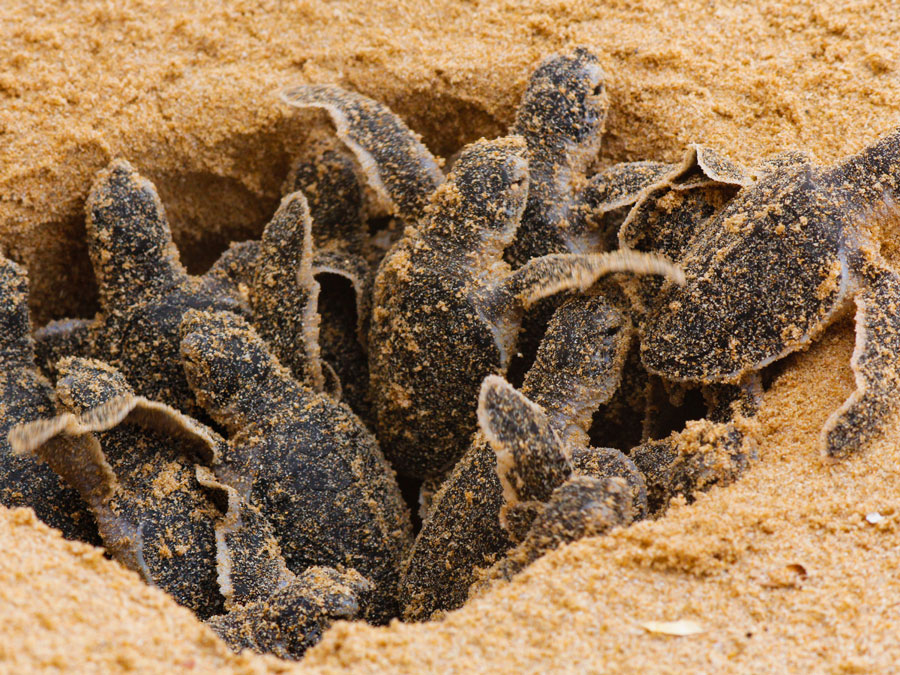
What people leave behind on the sand can become a barrier by night. Beach chairs, umbrellas, toys, coolers, sandcastles, and deep holes may seem harmless during the day, but they can block nesting females or trap hatchlings trying to reach the water. Before you leave, remove your gear, flatten sand structures, and fill in any holes your group made. Never enter marked nesting areas, move protective barriers, or let children dig nearby. A turtle may wait decades to return and lay eggs on a beach. It would be a miserable joke if a plastic shovel or a beach chair stopped her.
Support Rescue, Cleanups, and Local Conservation
You do not need to be a scientist to make a real difference. Join a beach cleanup, support trusted turtle conservation groups, follow local nesting season rules, and report injured, stranded, or entangled turtles to local wildlife authorities instead of trying to handle them yourself. If you live near the coast, learn who to call before an emergency happens. If you are just visiting, share accurate information with the people around you. Not every act of help looks dramatic, but conservation is built on ordinary people doing the right thing repeatedly.